Riparian Buffers
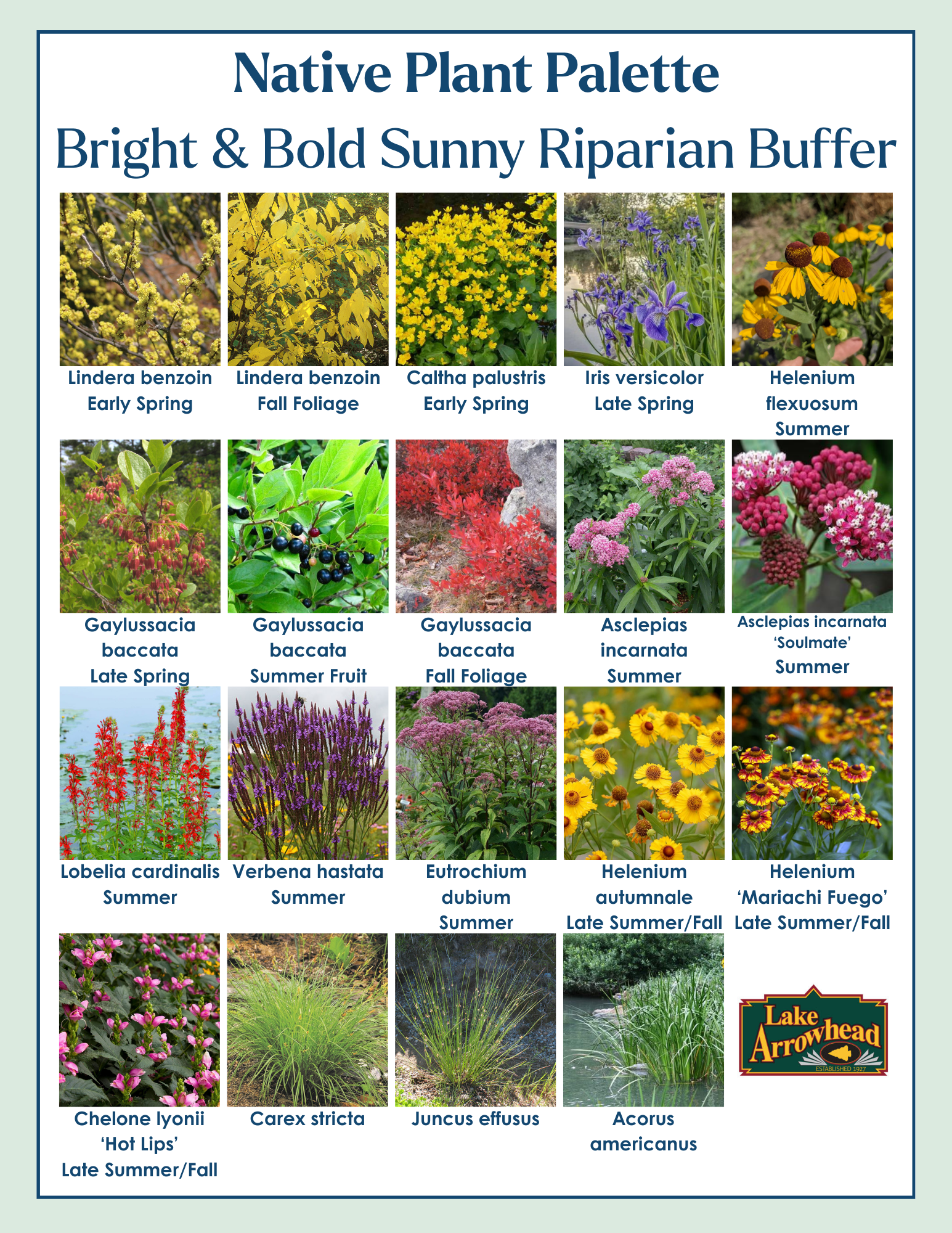
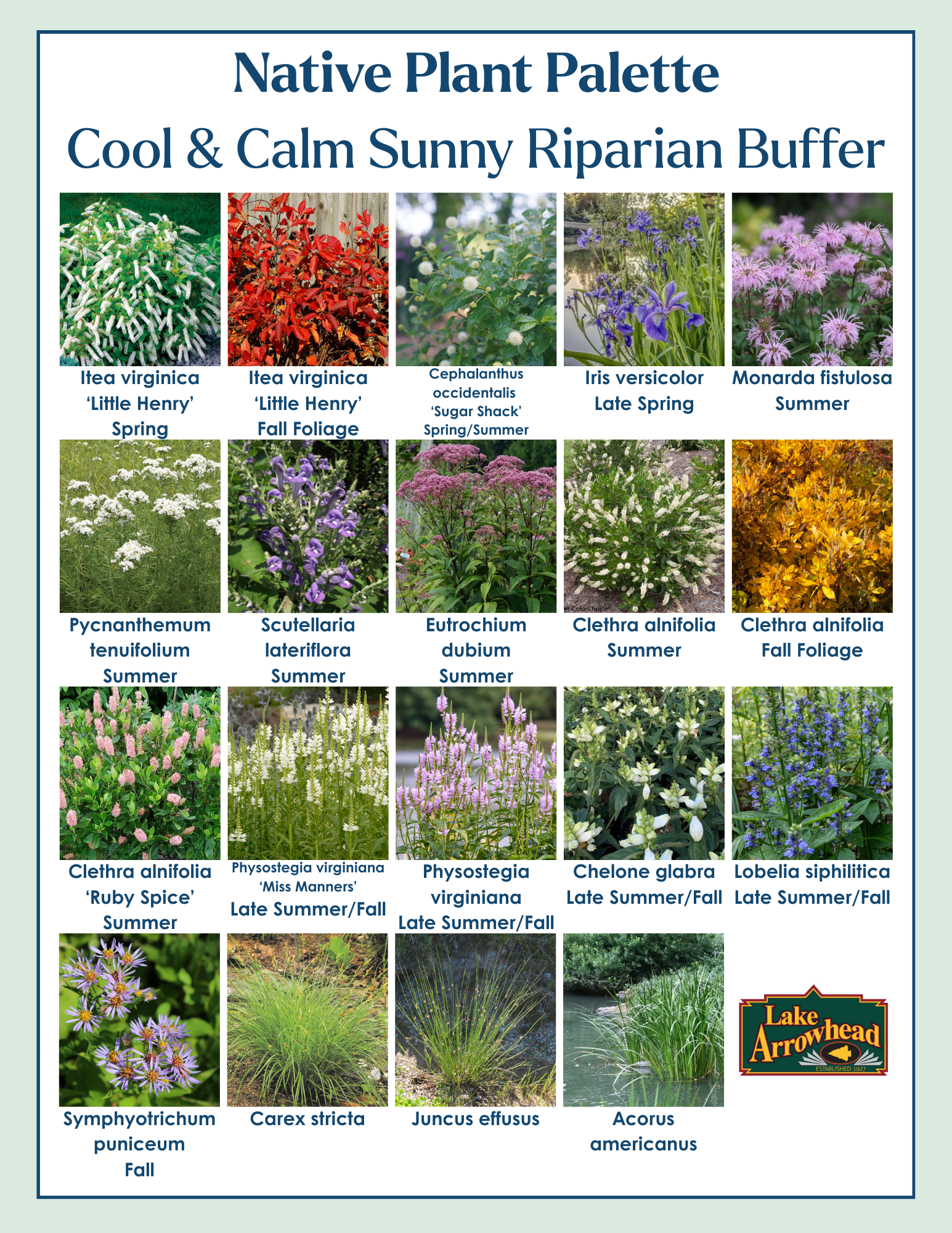
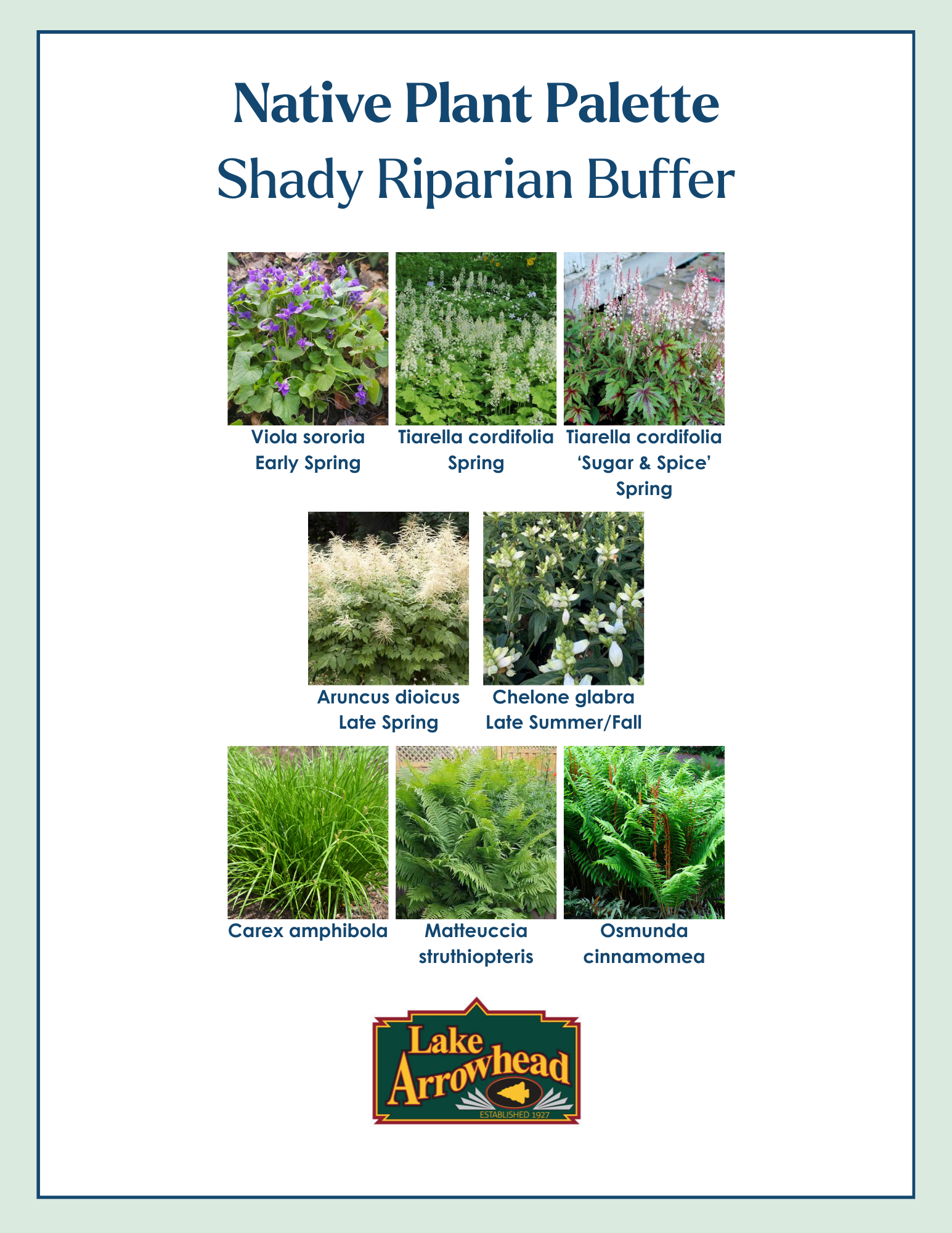
A riparian buffer is a vegetated area—usually composed of native trees, shrubs, and grasses—planted along a stream, river, pond, or wetland. It plays a vital role in protecting water quality, stabilizing banks, and supporting biodiversity.
Why Add a Riparian Buffer?
Improves Water Quality: Buffers function like a natural sponge and filter out pollutants like fertilizers, pesticides, sediment, and pet waste before they reach the waterway.
Prevents Erosion & Stabilizes Banks: Deep-rooted native plants hold soil in place, reducing runoff and preventing bank collapse.
Supports Wildlife Habitat: Riparian buffers provide essential food, shelter, and corridors for birds, amphibians, pollinators, and aquatic species.
Controls Invasive Species: Healthy native buffers outcompete invasive plants and help restore balance to disturbed ecosystems.
Enhances Property Value & Beauty: Buffers add natural beauty, seasonal interest, and privacy while creating a peaceful, habitat-rich landscape.
Sourcing Tips:
1-gallon plants are ideal for quick establishment and weed competition. If that’s cost-prohibitive, landscape plugs are a great alternative. Use botanical names to ensure you are getting the correct (and native) species.
Some options:
My Backyard at Nectars (1600 River Rd, Titusville, NJ) – Make a Lambertville day trip and stop by the nursery for your native plants! https://www.facebook.com/profile.php?id=100089690425758
Pinelands Direct Native Plants (seeds, plugs, mail order) - pinelandsdirect.com
The Pollen Nation (plugs, mail order) – thepollennation.com
Prairie Moon Nursery (seeds, plugs, mail order) - prairiemoon.com